In the mid-2000s, Juan Román Riquelme pausing over a free-kick for Villarreal felt like the purest expression of the classic number 10: one player holding the rhythm of a Champions League semi-final in his boots. That picture still defines how many fans think about creativity in modern football. The reality on the pitch has moved on. The number 10 has been broken apart by pressing, positional rotation and new ideas about space, then rebuilt as a set of hybrid roles spread across the team.
The classic playmaker’s bargain
For most of the 20th century, the number 10 was the team’s creative centre and its biggest luxury. Pelé and Zico for Brazil, Michel Platini for France, Diego Maradona for Argentina, later Zinedine Zidane and Francesco Totti in Europe: these were players given freedom between midfield and attack while others did the running.
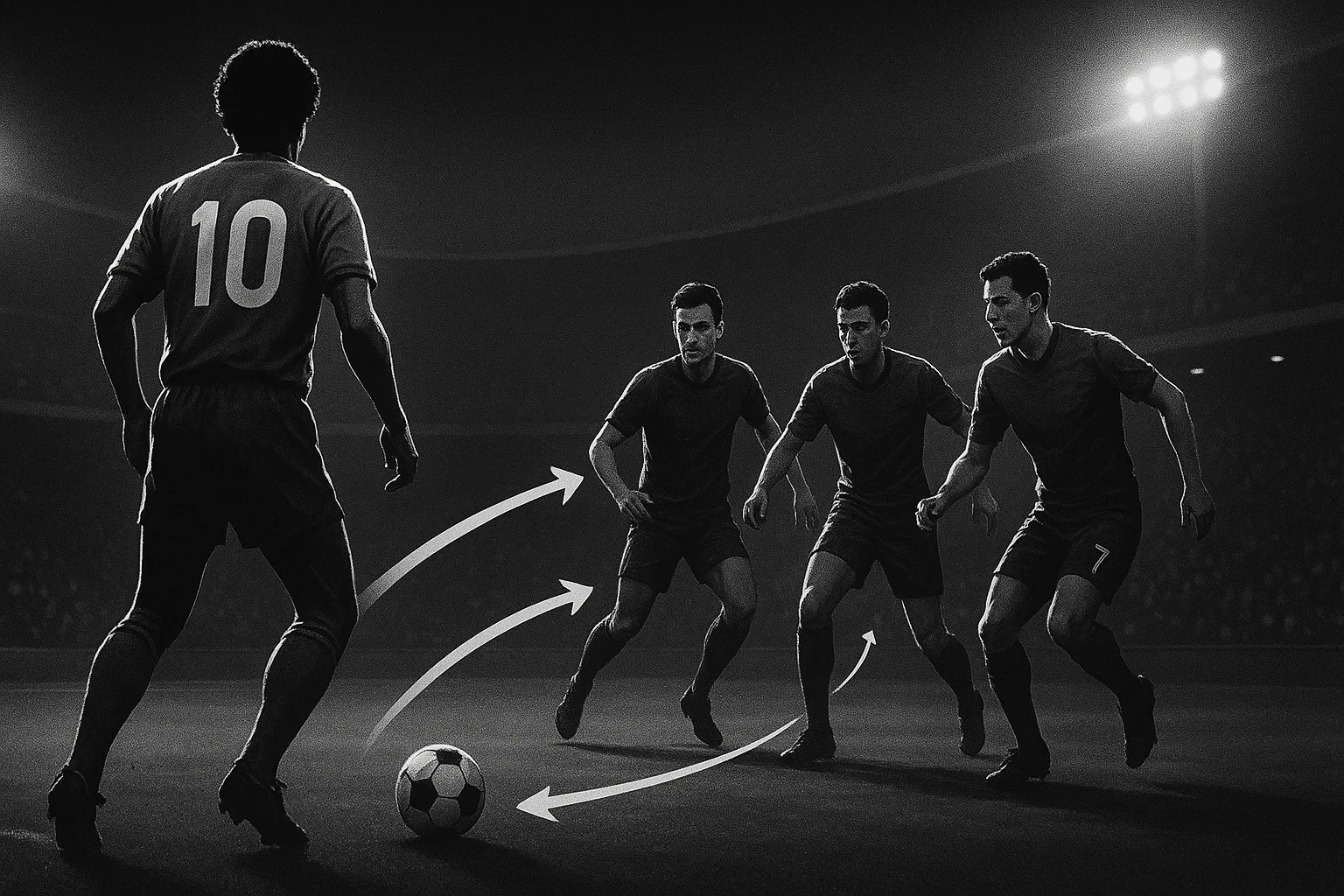
The bargain was clear. The playmaker was protected from heavy defensive work. In return, he had to produce moments of invention that nobody else could: the disguised through-ball, the wrong‑footing dribble, the shot from nowhere. Midfields were built around that deal. A regista or holding midfielder screened the defence, wingers stretched the pitch, and the number 10 stood in the pocket between the lines waiting for the ball.
Brazil’s 1970 World Cup side showed the structure at its cleanest. Gérson dropped to receive and distribute from deep, Rivelino and Jairzinho attacked wide channels, and Pelé roamed into the space just behind the striker. If you took the ball away from Pelé, Brazil lost more than a player; they lost their decision-maker.
The old number 10 was a protected genius: if you stopped him, you stopped the team.
The downside became obvious as defending improved. Italian teams specialised in assigning a marker whose only job was to follow the playmaker everywhere. Once opponents crowded that zone or used a dedicated destroyer, the classic 10 could be starved of influence for an entire match.
Total Football and the move away from fixed stations
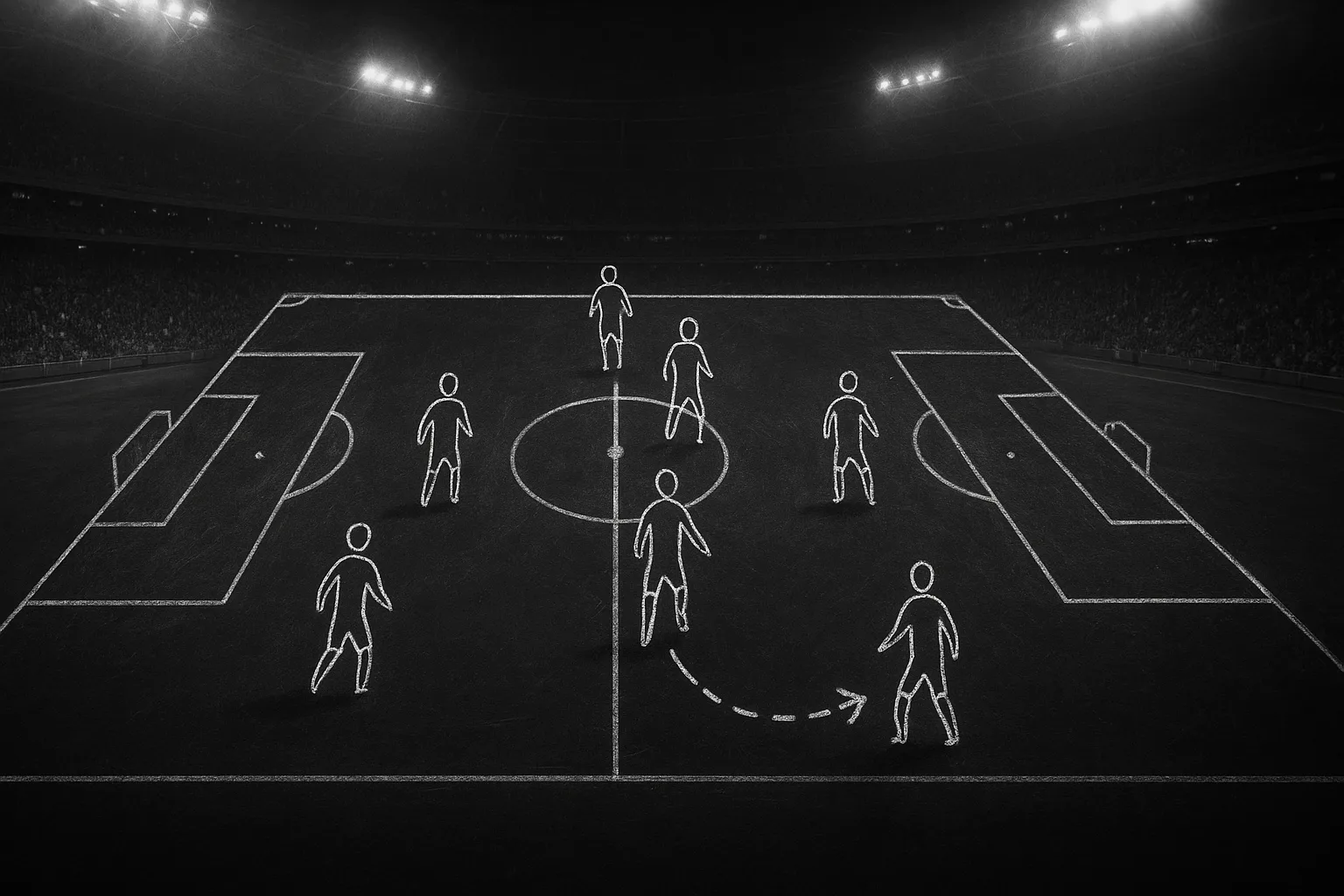
The first serious challenge to the idea of a fixed creative station came with the Dutch sides of the early 1970s. Johan Cruyff drifted from centre‑forward into midfield, out to the wing and back again. Ajax and the Netherlands swapped positions so often that the 10 was no longer a place on the pitch, but a tendency to be where the game was developing.
Total Football did not abolish roles; it made them fluid. A player could leave his nominal position to create an overload or exploit a weakness, as long as a teammate rotated into the space he had vacated. Creativity was still central, but it no longer had to be attached to someone excused from everything else.
That lesson took decades to filter into mainstream club football. Once coaches accepted that a creative player could move freely and still contribute to the team’s structure, the idea of protecting one artist at all costs started to look less appealing.
Pressing and the end of luxury
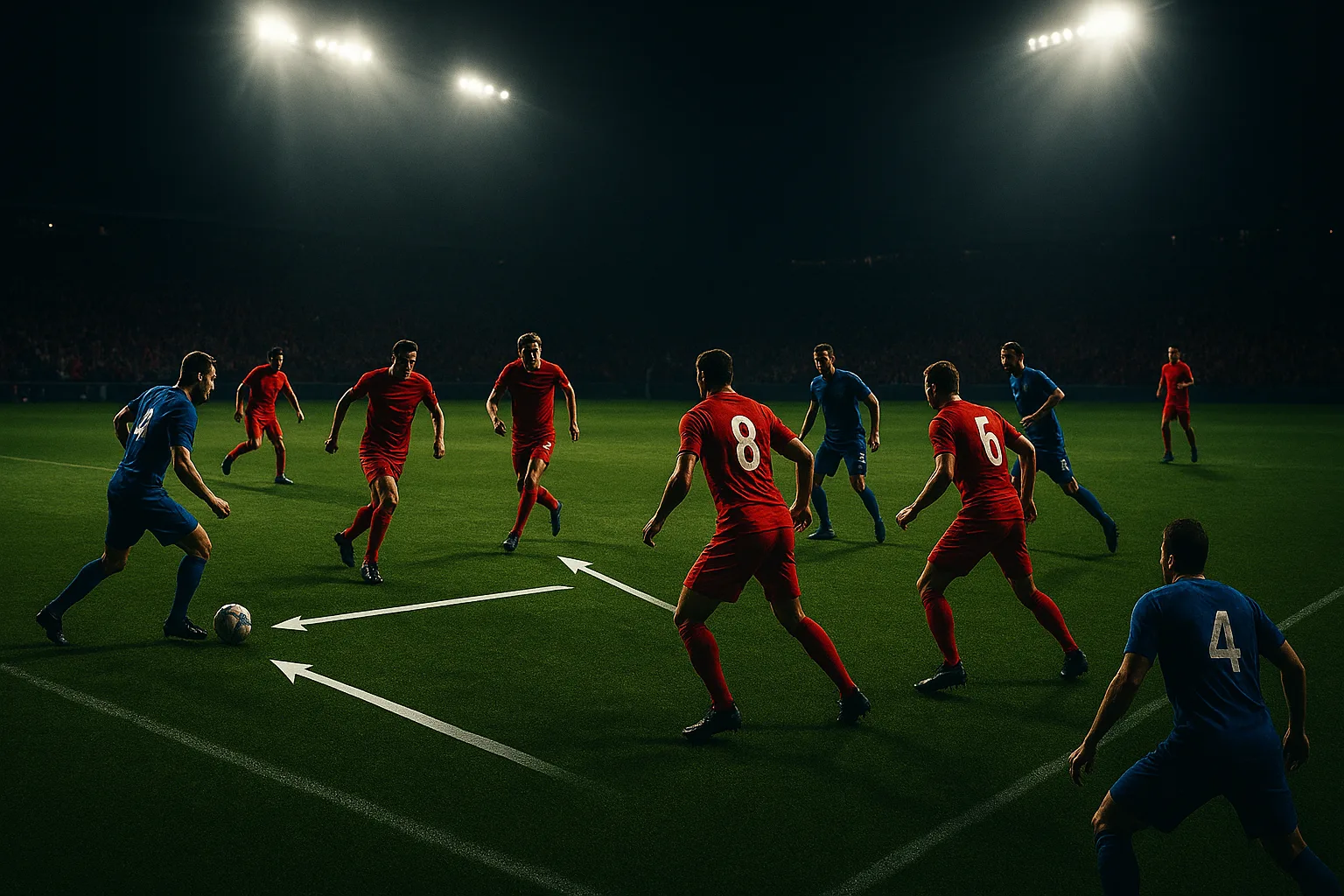
High pressing finished the job that Total Football started. When teams began to press opposition centre‑backs as a default, the number 10 could no longer be shielded from the first defensive action. By virtue of his position between midfield and attack, he became one of the players closest to the ball when it was lost.
This shift turned the 10 from a passenger without the ball into a protagonist. If he did not press or at least block passing lanes, the entire shape fell apart. Managers who once tolerated a playmaker strolling after a turnover now saw him as a weak link opponents would exploit.
Roberto Firmino’s role under Jürgen Klopp at Liverpool captured the new expectation. Listed as a centre‑forward, he constantly dropped onto the opposition pivot, cut angles into midfield and set the tone for the rest of the press. His creativity was measured not just in assists, but in recoveries and regains that allowed teammates to attack against a broken structure. For a closer look at how teams decide when the first line should step out, Pressing 101: When to Press and When to Drop breaks down those triggers.
Once every outfield player was expected to contribute defensively, the idea of carrying a 10 who did not press started to feel indulgent. In many systems, the pure trequartista disappeared altogether.
The playmaking diaspora
As the classic 10 faded, his responsibilities scattered. Build‑up and final‑third creation were no longer the domain of one specialist, but of several roles.
Deep‑lying playmakers such as Andrea Pirlo, Xabi Alonso and Toni Kroos took over the first phase of construction, dropping close to the centre‑backs to dictate tempo and find vertical passes. Full‑backs became auxiliary midfielders or wingers, stepping inside to create overloads or pushing high to provide width.
The most disruptive change came from the false nine. Lionel Messi under Pep Guardiola at Barcelona showed that a centre‑forward could vacate the penalty area, drag defenders with him and turn into the team’s main playmaker. When the striker drops and the wide players attack the box, the need for a static 10 behind them is reduced. The role is still present, but now it is shared. For more on how that shift altered attacking structures, see The False Nine: How a Forgotten Role Changed Modern Football.
The result across top leagues is familiar: common shapes like 4‑3‑3 or 3‑2‑4‑1 that list no dedicated number 10 on the team sheet and yet produce more chances and more controlled possession than many classic 10‑centric sides.
The hybrid 8/10 and the multi‑phase midfielder
What survived of the number 10 is less a position and more a profile. Coaches now talk about the eight‑ten hybrid, the player who is both an advanced midfielder and an attacking organiser.
In a 4‑3‑3, this hybrid is the most advanced midfielder in possession, joining the front line, and one of the first to press out of possession. Bruno Fernandes for Manchester United, Martin Ødegaard at Arsenal and Mason Mount in his Chelsea and early Manchester United days all fit parts of this description: they create, they arrive in scoring zones and they are expected to set pressing cues.
Kevin De Bruyne at Manchester City offers another angle on the modern number 10. He receives in the half‑spaces, drives forward with the ball, swings crosses from wide areas and arrives late in the box to finish moves. At the same time, he tracks runners, joins the press and helps control central zones when City defend. His influence covers half the pitch, not just a strip behind the striker.
There is also the arrival specialist. Thomas Müller at Bayern Munich, nominally a second striker or attacking midfielder, built a career on timing runs into the box rather than orchestrating every pass. His “Raumdeuter” role — interpreter of space — shows how creativity can mean choosing the right lane to attack rather than playing the final ball.
At Bayer Leverkusen, Florian Wirtz has become a contemporary example of the hybrid creator. In their unbeaten Bundesliga title season, he operated between midfield and attack, linking play, pressing intelligently and still finishing with double figures for both goals and assists in the league. His freedom was made possible by teammates who absorbed more of the defensive load, proof that coaches will still bend structure for a truly special talent.
Creativity inside a stricter framework
The obvious worry for fans is that more structure and more running means less imagination. The reality on the pitch is subtler. Creativity has shifted from individual improvisation to collective patterns without disappearing.
Before, attacking play often hinged on what one player happened to see. Now it more often depends on pre‑planned movements: which midfielder makes the decoy run, which full‑back inverts into the half‑space, which forward drops off to create a passing angle. Training sessions drill these combinations over and over so that, in games, the ball moves quickly through rehearsed routes.
That does not stop individual flair. Jamal Musiala at Bayern, Pedri at Barcelona and Wirtz at Leverkusen all work within detailed structures and still beat players one‑on‑one, glide through tight spaces and see passes others miss. The difference is that their risk‑taking is framed by a clear team idea. When they gamble, teammates know where to move if it comes off, and how to react if it fails.
The danger is not that coaching kills creativity, but that the job description of the modern 10 becomes a checklist: press, sprint, tackle, link, shoot. A player who ticks every box can look complete and still lack the unpredictability that made the classic playmaker so feared. The best managers recognise that and will quietly exempt one key player from certain tasks in specific moments to leave room for genius.
What the shirt means now
The number 10 shirt has turned from an answer into a question. When a coach hands it out today, the decision usually reflects a broader choice about how the team will create.
Do we need a midfielder who defends first and then creates? A forward who drops off and becomes a passer? Or a classic creator who is protected enough to improvise? Each decision produces a different style: a transition‑heavy side built on high regains, a possession team that constructs from deep, or a more romantic setup that orbits around one brain.
What has not changed is the core demand: the player wearing 10 still has to make the ball do something unexpected at least a few times a match. The modern twist is that he has to do it while pressing, rotating and managing space.
Watch your next game with that in mind. When the ball is won high up the pitch, look for the player who appears in the right pocket, receives under pressure and turns a half‑chance into a real one. That is where the modern number 10 lives — not fixed between the lines, but moving through them, creating and destroying in the same breath.