The final whistle blew at Soccer City on 11 July 2010. Spain had just beaten the Netherlands 1-0 after extra time to win their first World Cup, with roughly 60% of the ball and more passes than any team had ever completed in a final. For a few years, Barcelona and Spain turned tiki-taka into the default blueprint for how elite sides were supposed to play.
The Cruyffian blueprint
Tiki-taka wasn’t born in 2008. Its roots run through Dutch Total Football and into Johan Cruyff’s Barcelona, where he coached from 1988 to 1996. Cruyff imposed a 4-3-3, demanded that every player be comfortable receiving under pressure, and treated space as something you created by moving opponents, not just sprinting into gaps.
The phrase “tiki-taka” itself was popularised by Spanish commentator Andrés Montes, an onomatopoeic nod to the sound of quick, short passing. The football behind the term was more systematic: wide players stretching the pitch, a passing midfield trio, and a high defensive line that kept the team compact from back to front.
La Masia made the idea sustainable. Youngsters were drilled in triangles, body orientation, and positional awareness from their teens. That academy produced Xavi, Andrés Iniesta and Sergio Busquets, midfielders who could treat a Champions League tie almost like a rondo.
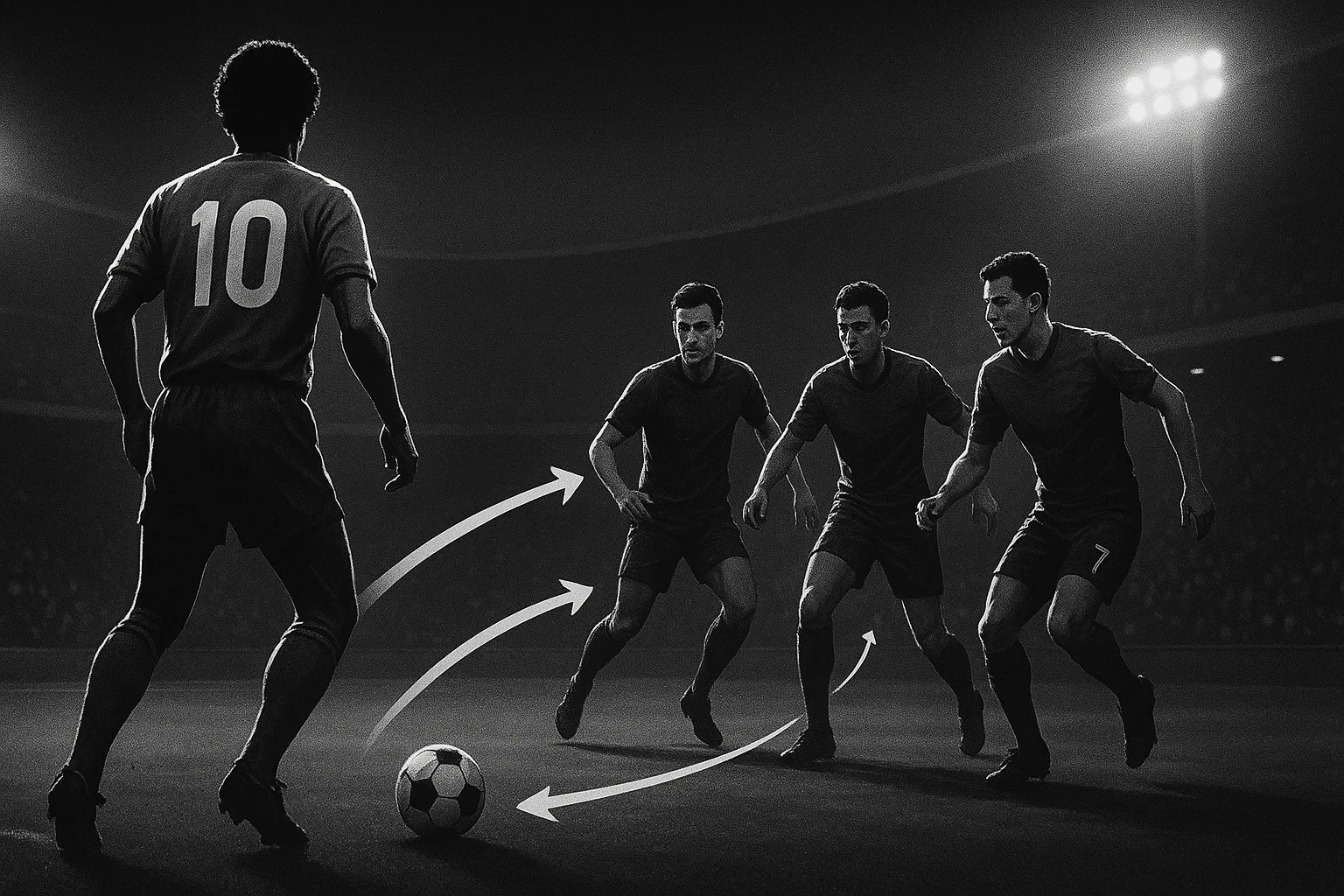
For a broader look at how creative playmakers evolved in this era, see our piece on the evolution of the number ten.
What tiki-taka really was
Tiki-taka is often reduced to “just lots of passing,” which misses the point. On the pitch, it fused several non-negotiables:
- Short, precise passing to control tempo and pin opponents in tight zones.
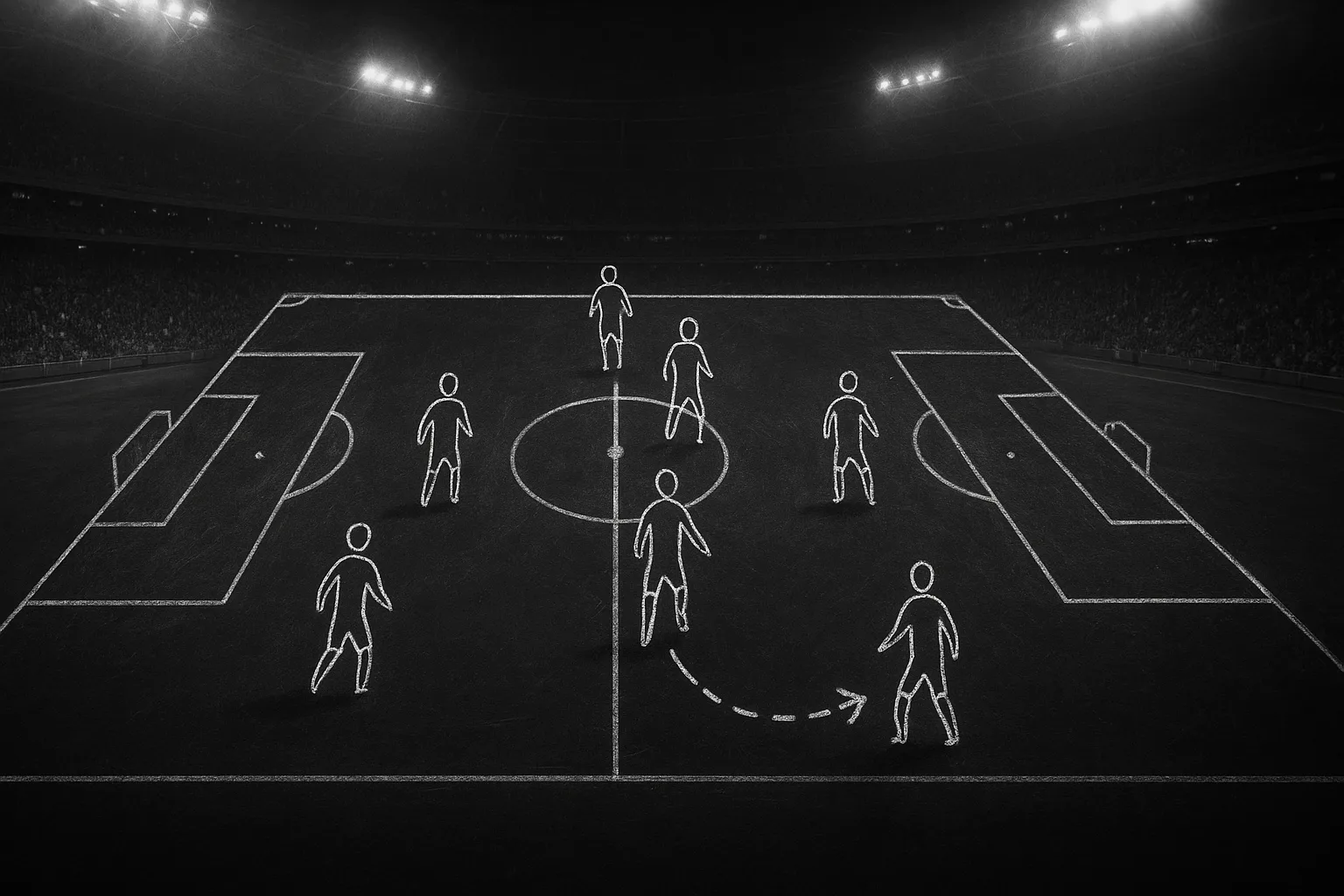
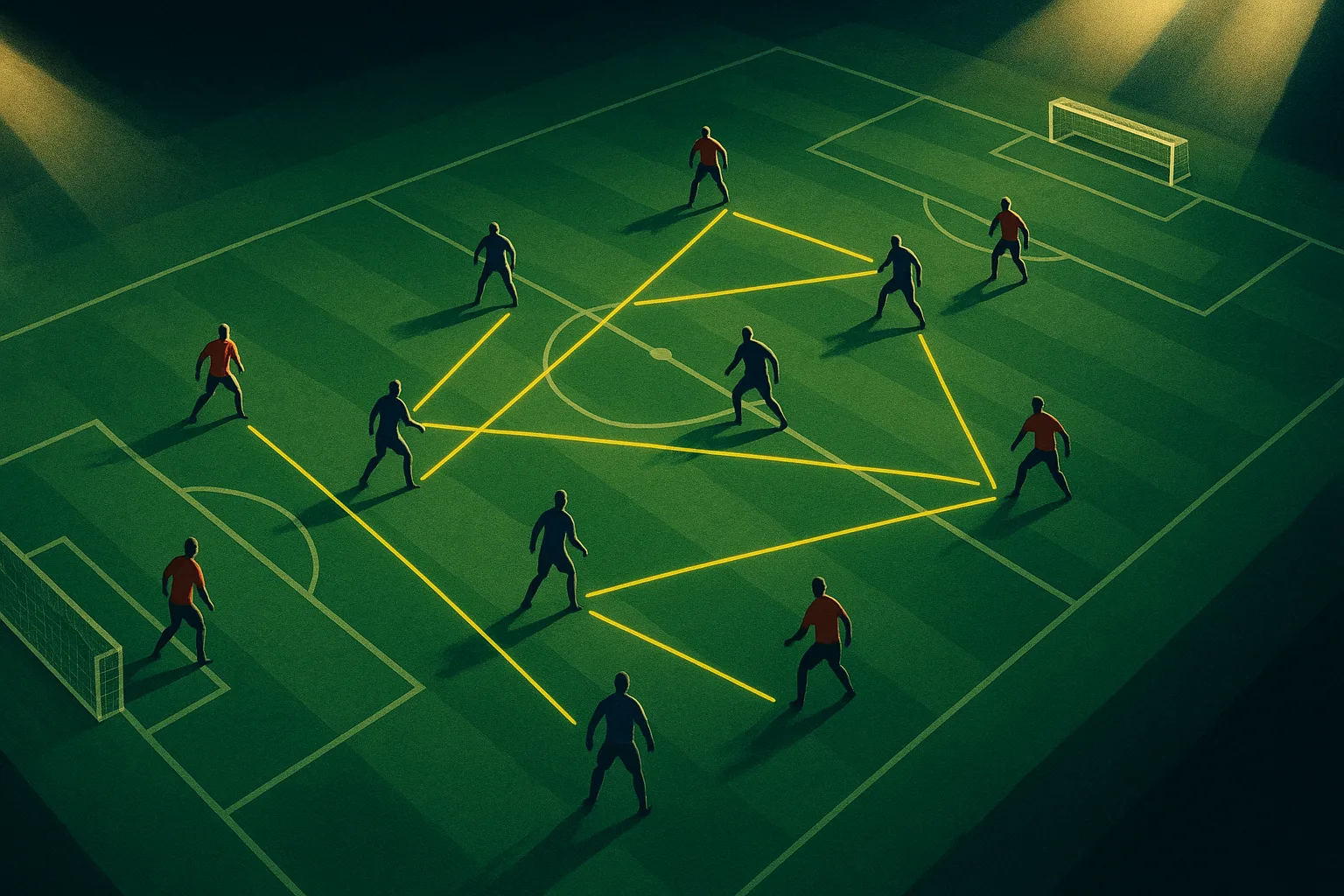
- Triangular support and rotations so the receiver almost always had at least two safe options.
- A deep pivot who recycled the ball and screened counters.
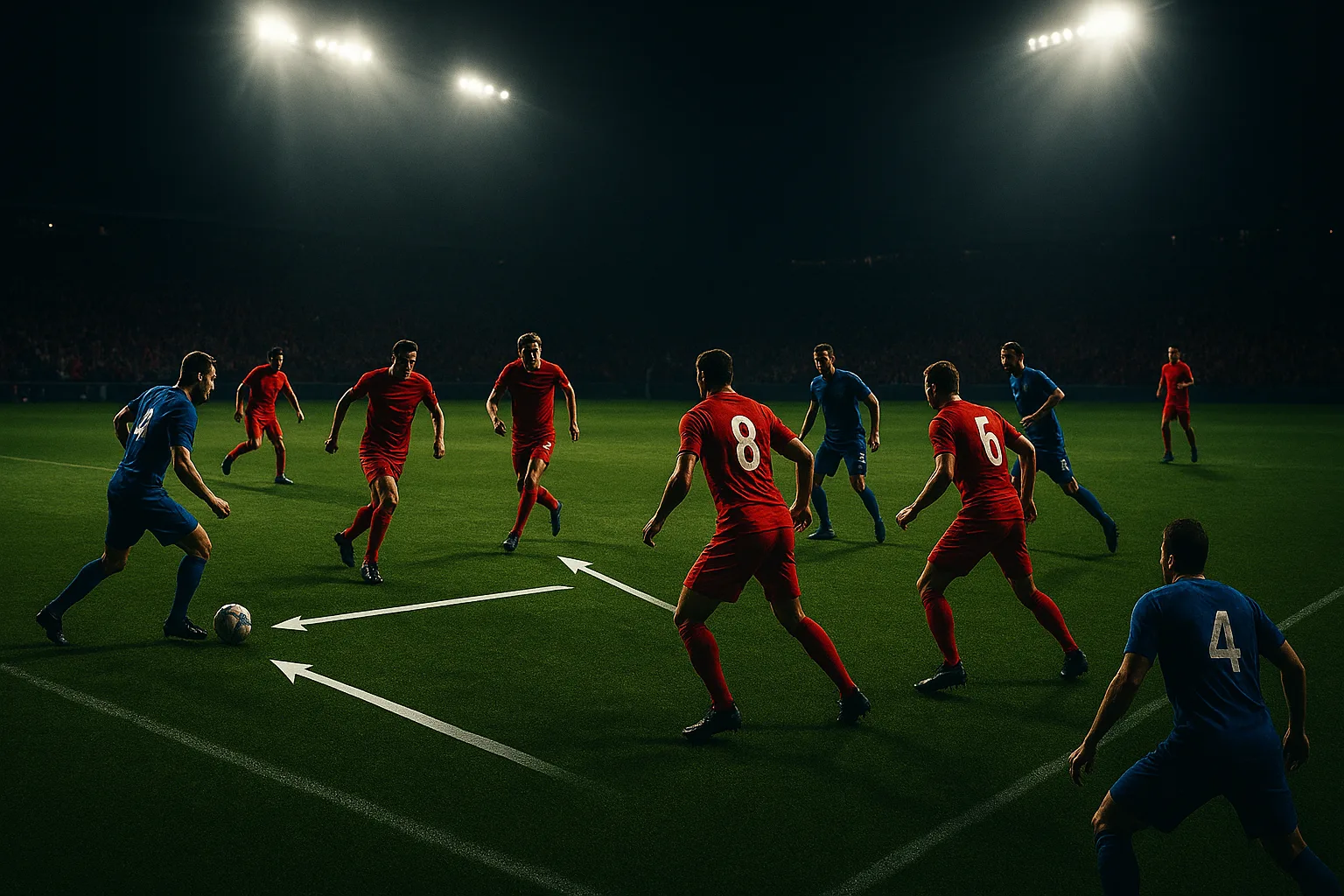
- Immediate pressure after a turnover to win the ball back high.
Pep Guardiola’s appointment as Barcelona coach in 2008 pushed those ideas to their extreme. His 2008–09 side won the treble, with positional rules mapped out zone by zone and clear cues for when to trigger the press. Xavi and Iniesta played as both metronomes and accelerators, while Busquets sat in front of the back line, taking the riskiest passes under pressure and turning them into simple exits.
Up front, Guardiola’s key twist was turning Lionel Messi into a roaming striker. Used as a false nine, Messi dropped into midfield, dragged centre-backs out of their shape and opened lanes for wide forwards like Pedro and David Villa to attack the box. That role is unpacked in detail in our explainer on the false nine.
Defensively, Barcelona and Spain treated losing the ball as the start of a new phase, not the end of an attack. Several players would immediately swarm the ball carrier; if the press failed after a few seconds, the team snapped back into a compact block. The timing of when to press and when to drop is a tactical craft in itself, covered in our guide to pressing decisions.
Barcelona and Spain at full power
Guardiola’s Barcelona turned theory into trophies. Between 2008 and 2012, they won multiple league titles and two Champions League crowns, including a 2-0 win over Manchester United in the 2009 final where United were simply starved of the ball. The pattern became familiar: opponents chased, Barcelona passed, and eventually the gaps appeared.
Spain translated that club model to the international stage. Luis Aragonés built the Euro 2008 side around a possession-focused midfield, then Vicente del Bosque doubled down with a core featuring Xavi, Iniesta, Busquets and Xabi Alonso. Spain won Euro 2008, the 2010 World Cup and Euro 2012 – three major tournaments in a row, an unprecedented run.
In the Euro 2012 final against Italy, Spain’s 4-0 win was less about the scoreline than the control. They outpassed Italy by a wide margin, used a hybrid of strikers and attacking midfielders, and kept Italy pinned deep for most of the night. Possession was a weapon of attrition: the longer Italy had to chase, the more their structure frayed.
The cracks appear
No system stays untouchable. The first meaningful warnings came in European knockout ties rather than major finals.
In 2010, José Mourinho’s Inter knocked Barcelona out in the Champions League semi-finals by sitting deep, staying narrow and accepting that they would barely see the ball. Barcelona dominated possession but found themselves funnelled into harmless wide areas.
Chelsea’s 2012 semi-final success made the template obvious. Roberto Di Matteo’s side defended the width of the penalty area, blocked central lanes and forced Barcelona to cycle the ball without incision. Barcelona had over 70% of the ball across the two legs yet lost the tie 3-2 on aggregate. It was a blunt lesson: if you deny space behind the defence and keep your lines compact, tiki-taka’s passing can become sterile.
A year later, Bayern Munich produced a different answer. In the 2013 Champions League semi-finals they beat Barcelona 7-0 on aggregate, pressing high, attacking the space behind Barcelona’s advanced full-backs and using physical, fast midfielders to win second balls. Rather than absorbing pressure, Bayern hunted the ball in Barcelona’s half and broke quickly once they won it.
Spain’s 2014 World Cup collapse made the decline impossible to ignore. In their opening game, the Netherlands – the side Spain had beaten in the 2010 final – hammered them 5-1 with direct runs, diagonal balls in behind and aggressive pressing on Spain’s build-up. Chile then beat them 2-0, swarming the midfield and forcing turnovers. Spain went out in the group stage for the first time since the 1960s.
How rivals solved it
The counters to tiki-taka were not a single trick but a set of habits that spread across Europe.
Teams adopted compact low blocks, often two lines of four, conceding the flanks but closing the central channels where Barcelona and Spain liked to play. With no clear route between the lines, possession became recycling rather than penetration.
Coaches started to target the pivot. Pressing or double-teaming the first receiver – usually Busquets or Xavi dropping deep – disrupted the rhythm and forced goalkeepers and centre-backs into longer, riskier passes. Some teams deliberately played long from the back to bypass the first wave of pressure altogether.
Transitions became more ruthless. Once a side won the ball, they attacked quickly, hitting the spaces behind advanced full-backs or between wide centre-backs. These counters didn’t require much possession; they simply punished the moment when a possession side was stretched and least able to defend.
Domestically, Diego Simeone’s Atlético Madrid embodied the new mood. Intensely organised, brutally direct and comfortable without the ball, Atlético won La Liga in 2013–14 and reached two Champions League finals in three seasons. Their success proved you could beat a possession giant by focusing on structure, duels and transitions rather than matching them pass for pass.
What survived
Tiki-taka in its pure, patient form is no longer the default model, but its ideas have become basic coaching language.
Positional play, support angles and pressing immediately after losing the ball are now standard in academies worldwide. Many teams still aim for high possession, yet they blend it with more vertical runs, wider threat and clearer plans for counter-attacks.
Guardiola’s Manchester City sides show this evolution. They dominate the ball, but with explosive wingers and a true centre-forward they attack space more aggressively than his Barcelona ever did. Spain’s current team under Luis de la Fuente, which won Euro 2024 by beating England 2-1 in Berlin, mixed controlled possession with pace and width through players like Nico Williams and Lamine Yamal, plus a willingness to play forward early when the moment was right.
The coaching world has absorbed the main lesson: possession is a tool, not an ideology. It has to lead either to higher-quality chances or to safer defensive positions when the ball is lost. If it does neither, the opponent is simply being invited to spring a counter.
Possession is only worth training if you obsess over what happens in the three seconds after you lose it.
The coaching takeaway
Tiki-taka’s rise came from alignment – club philosophy, youth development, a generation of technically gifted midfielders and a coach willing to enforce positional detail. Its fall came when opponents started building game plans specifically to attack its weak points: predictable build-up routes, space behind a high line, and an overreliance on perfect timing.
For modern coaches, the takeaway is sharp. Train your team to keep the ball with purpose, but write transition plans into the same sessions: where the first pass goes after a turnover, who attacks space, who protects the back line. The sides that once beat tiki-taka didn’t reject the ball; they treated every lost pass as a chance to win the game. Any new possession model that wants to survive will have to do the same.