When Antonio Conte switched Chelsea to a 3-4-3 after a heavy defeat at Arsenal in the autumn of 2016, the decision looked bold rather than inevitable. Within weeks it produced thirteen straight league wins and a title, turning what many saw as a niche back-three system into a mainstream blueprint built around wing-backs, central overloads and clear pressing rules.
The 3-4-3 starts with three centre-backs, two wing-backs, two central midfielders and three attackers; that basic skeleton is where the formation's strengths and trade-offs come from. Managers use it to create width without traditional full-backs, to manufacture central overloads and to switch quickly between aggressive pressing and compact defending.
Basic structure and player profiles
On paper the 3-4-3 is straightforward: a back three, two wing-backs, a midfield pair and a front three. On the pitch it’s a system of roles and sliding lines.
The centre-backs form the base. The two wide centre-backs sit slightly wider to cover the channels and deal with overlapping full-backs, while the central centre-back acts as organiser and, in many systems, the most reliable passer. In build-up one of the three often carries the ball into midfield, giving the team an extra player in the first phase against sides that press with one striker.
Wing-backs occupy the wide lanes and need the engine of modern full-backs with the instincts of wide attackers. Under Conte at Chelsea, Victor Moses and Marcos Alonso were repurposed as wing-backs who provided width and crossing, while César Azpilicueta, David Luiz and Gary Cahill formed a back three that could defend wide threats without a flat four.
Midfield is usually a balance: one more defensive player screens the back three, and one more mobile midfielder connects to the front line. In elite sides that use this shape, that pairing ranges from N’Golo Kanté and Nemanja Matić at Chelsea to more creative duos who can step into half-spaces when needed.
How the 3-4-3 works in attack
The shape’s attacking promise is simple: win width, then overload the centre.
Wing-backs hold wide positions to stretch the opposition and create one-on-one situations on the flanks. The front three can split into a central striker and two wide forwards, or it can feature a false nine who drops between the lines with two high wingers who cut inside. Coaches pick the version that best suits their striker and the spaces they expect to find.
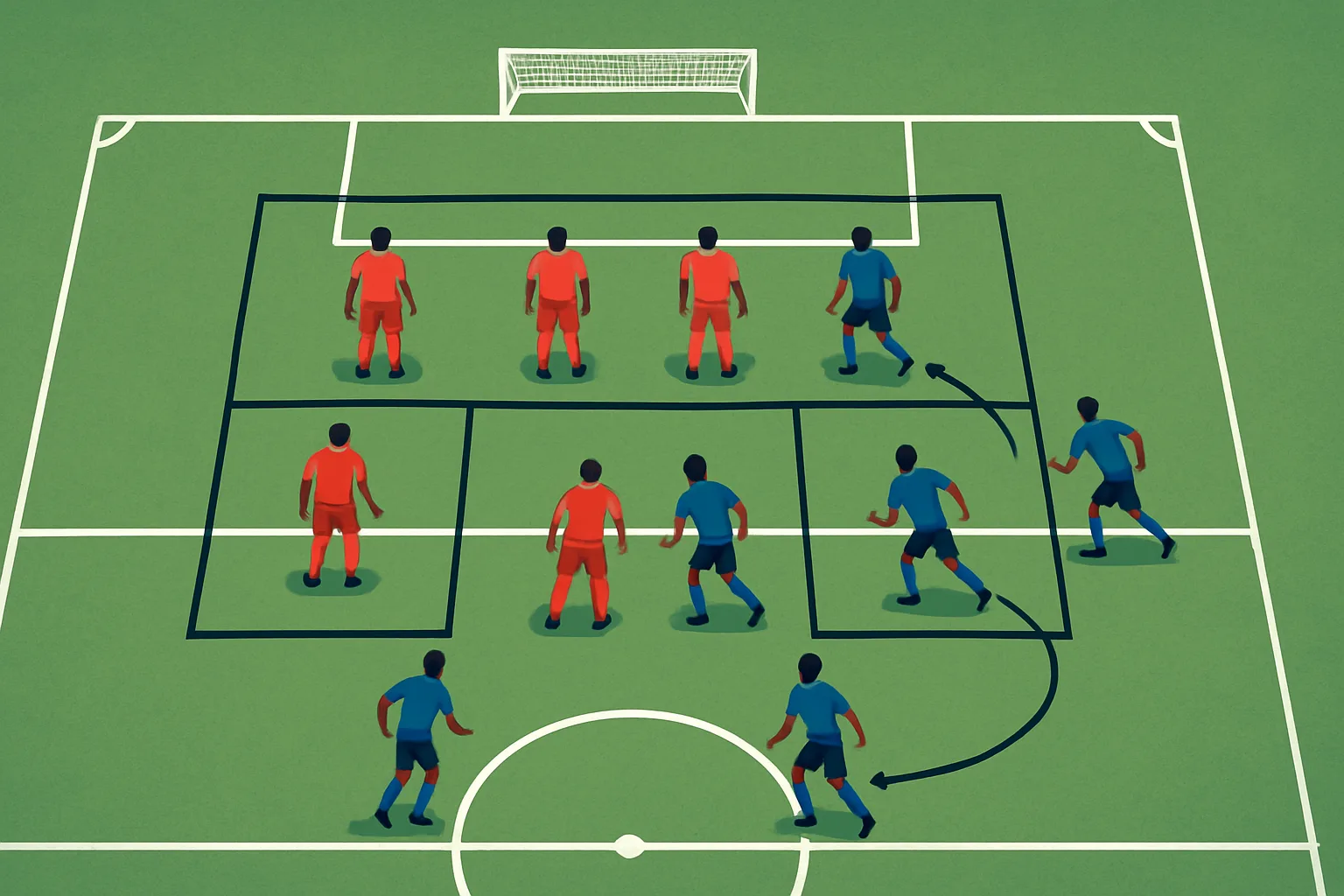
Central overloads happen when one of the wide forwards drifts into the half-space and a midfielder steps up or carries the ball forward. With two central midfielders and three forwards, a 3-4-3 can create pockets of numerical advantage between the opposition’s defensive lines, especially against a flat back four. A common pattern is: short pass from a centre-back into the midfield pivot, a forward dribble into the half-space, then a wing-back arriving late on the overlap.
That sequence creates frequent 3v2 moments against many back fours: wing-back, wide forward and striker versus full-back and centre-back. Timing matters as much as numbers. Quick switches from one wing-back to the opposite winger force opposing full-backs to decide between stepping across or holding their line; either choice opens space somewhere else.
Defensive shape and trade-offs
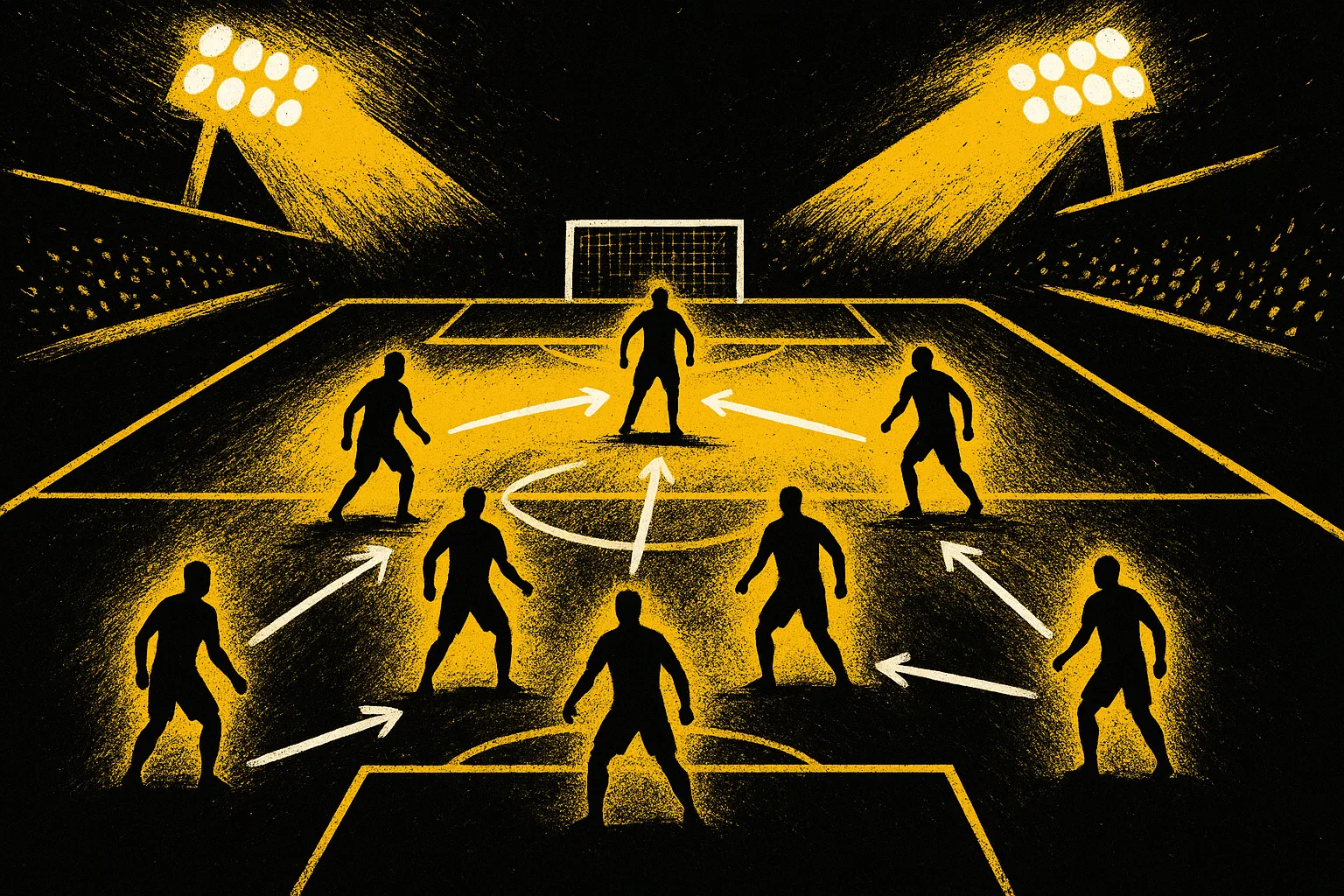
Out of possession, the 3-4-3 usually converts into a five-man defensive line. Wing-backs tuck in alongside the three centre-backs, creating a 5-4-1 or 5-3-2 depending on how the midfielders position themselves. The front three can either press high or drop into midfield to form a compact block.
Key responsibilities:
- Middle centre-back: organiser, steps out to cover a dropping forward.
- Wide centre-backs: protect channels and pick up overlapping opponents.
- Wing-backs: recover quickly to form the back five and defend one-on-one on the flank.
The main weakness is exposure of the half-space behind an advanced wing-back. If the wing-back is caught high and the nearest centre-back does not step across in time, the opponent can attack the gap with a runner from midfield or a wide forward. Coaches fix this either by dropping the defensive line deeper, instructing a midfielder to cover the channel, or drilling the wide centre-back to step out aggressively when the ball is played into that zone.
Wing-backs win matches in a 3-4-3; centre-backs keep you in them.
Pressing, triggers and transitions
The front three make the 3-4-3 well-suited to coordinated pressing because they can form a compact line that channels play toward the wings. Typical pressing triggers are a back-pass, a sloppy first touch, or a goalkeeper asked to play out short under pressure. When one of those triggers appears, the central forward jumps to the ball-carrier, the wide forwards lock onto passing lanes into midfield, and the wing-backs move up to press full-backs.
If the timing is off, the system opens up. A press that arrives half a second late can leave clean passing lanes behind the midfield and force the back three into emergency defending. For a broader framework on when teams should step up or drop off, see the guide to pressing triggers and decisions.
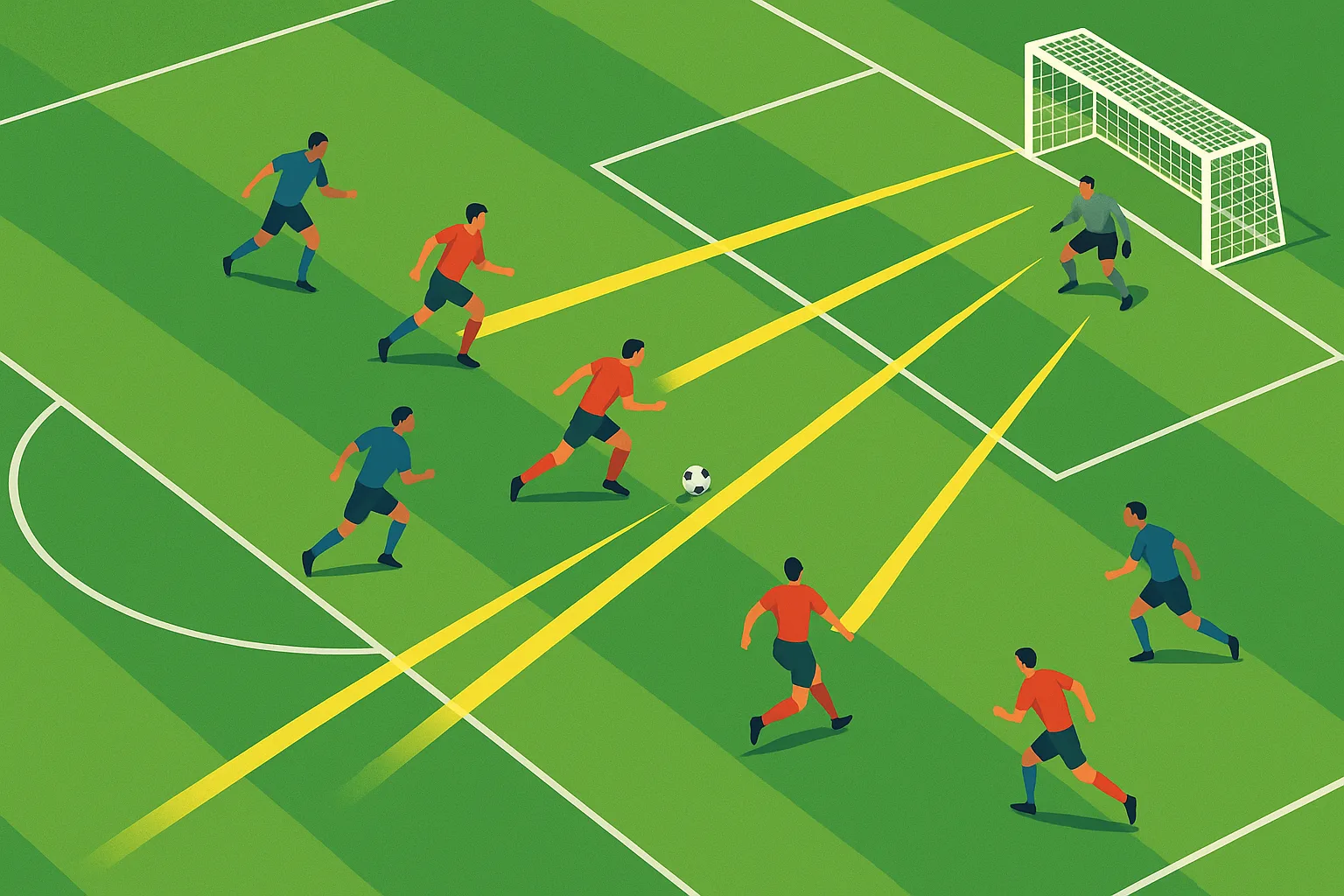
On turnover, the formation can convert into a six-player overload in the opponent’s half. A wing-back surges, a central midfielder breaks forward and a wide forward tucks inside behind the striker. If the opposing full-backs are high, the team can strike quickly into vacated wide channels. Those sequences are classic counter-attacks, built on the same phases outlined in The Anatomy of a Counter-Attack.
In-game tweaks and common variants
The 3-4-3 is adaptable; good coaches treat that flexibility as a toolbox, not a toy.
- 3-5-2 in possession: one wide forward drops into midfield, creating a three-man central unit while keeping the back three. Conte used this late in matches when he wanted more control of the ball.
- 5-3-2 in defence: wing-backs drop fully into the back line and one midfielder sits deeper, forming a low block to protect a lead.
- 3-4-1-2 or 3-4-2-1: add a number 10 or two attacking midfielders behind the striker to concentrate creativity in the half-spaces. Thomas Tuchel’s Chelsea and Xabi Alonso’s Bayer Leverkusen both used versions of this to overload central areas without sacrificing the back three.
- False nine phase: the central striker drops to link play, allowing inverted wingers and wing-backs to attack half-spaces while the midfield holds shape.
Each variation trades something: extra central control for less width, or more width for increased risk behind the wing-backs. The coach’s job is to pick the tweak that solves the specific match problem, whether that is breaking a low block, protecting a lead or chasing a game.
Player archetypes that suit the 3-4-3
Some player profiles make the whole system easier to run.
- Wing-back: high stamina, crossing quality, one-on-one defending and recovery speed. Victor Moses at Chelsea showed how a converted winger can thrive in the role; Achraf Hakimi at Inter added seven league goals in 2020–21 from a similar position, while Alphonso Davies at Bayern demonstrates how pure pace can turn recovery runs into instant counter-threats.
- Ball-playing centre-back: reliable under pressure and comfortable stepping into midfield. These defenders anchor the first pass in build-up and allow the team to break lines without risking cheap turnovers.
- Defensive midfielder: disciplined cover player who reads when to close the half-space vacated by an advanced wing-back and when to sit in front of the back three.
- Wide forward: able to either hold width and stretch the defensive line or invert into the half-space to combine. Versatile wide forwards let coaches switch between 3-4-3 and 3-5-2 without substitutions.
Teams without genuine wing-backs can still set up in a 3-4-3, but the risk is predictability. The formation becomes either too narrow, with wing-backs tucked in like standard full-backs, or fragile, with wing-backs stuck high and leaving big gaps behind them.
Practical coaching notes
Coaches who get the best from a 3-4-3 tend to train explicit patterns and recovery behaviours rather than relying on vague principles.
Wing-backs should rehearse three core situations: defending a 2v1 with a wide centre-back, delivering crosses under pressure after overlapping, and sprinting back to form a five-man line as soon as possession is lost. Centre-backs need cover-and-step drills with the defensive midfielder so the team can slide from a high press into a compact defensive block without hesitation.
Pressing triggers and transition roles should be written into training sessions: who jumps first when the ball goes back to the goalkeeper, who covers the vacated half-space behind a pressing wing-back, and which passing options the team is happy to concede. Substitution plans matter too. Bringing on a more defensive wing-back usually means accepting less width and shifting toward a 5-3-2; replacing a central midfielder with an extra attacker demands that the remaining players understand how to protect the wider spaces.
When the 3-4-3 works — and when it doesn’t
The shape works best when a squad has athletic wing-backs, ball-playing centre-backs who can step into midfield, and midfielders disciplined enough to cover the channels. It is especially effective against flat back fours, where half-space overloads and wing-back runs force defenders into constant decision-making.
It struggles against teams that overload the flanks with natural wingers plus advanced full-backs, or when the wing-backs are overworked or injured. Without reliable recovery runs and clear cover rules, the back three can be dragged wide and the middle of the pitch opens up.
The practical takeaway is simple: treat the 3-4-3 as a base skeleton, and rehearse small, specific switches that solve match problems — a practiced conversion to 3-5-2, a planned false-nine phase, or a clear pressing trigger — rather than hoping players will improvise under pressure. With the right wing-backs and disciplined centre-backs, the shape gives a coach both attacking variety and a predictable defensive fallback across ninety minutes.