When Gareth Bale picked up the ball near halfway in the 2014 Copa del Rey final and powered past Marc Bartra to score, it looked like raw pace deciding a trophy. In reality that counter-attack was a chain of decisions: the recovery, the early release into space, the committed run and the composed finish.
Leicester City’s 2015–16 title run told the same story over a whole season. N'Golo Kanté would win possession in midfield, Jamie Vardy timed his run behind a high defensive line, Riyad Mahrez or a full-back supplied the pass, and the move was over in under ten seconds. The counter-attack is not chaos; it is a repeatable pattern built on clear roles.
The four phases of a counter-attack
Phase 1: Ball recovery – the first five yards
Everything starts with the turnover. The counter-attack begins the instant possession changes hands, not when the striker receives the ball. Recoveries come from tackles, interceptions, goalkeeper saves or forced errors under pressure.
Where and how the ball is won dictates the rest of the move. A centre-back stepping out from a low block structure to intercept on the edge of the box has different options from a midfielder stealing the ball high up the pitch. The key detail is body position: a player who wins the ball facing his own goal needs an extra half-second to turn, and that delay often lets the opposition reset. The best ball-winners, like Kanté at Leicester, intercept already angled towards the opponent’s half and think forward immediately.
Coaches can hard-wire this phase by demanding a “head up” rule on recoveries and cueing the ball-winner to signal the outlet as he secures possession. That small habit accelerates the whole chain.
Phase 2: The outlet pass – breaking the first line
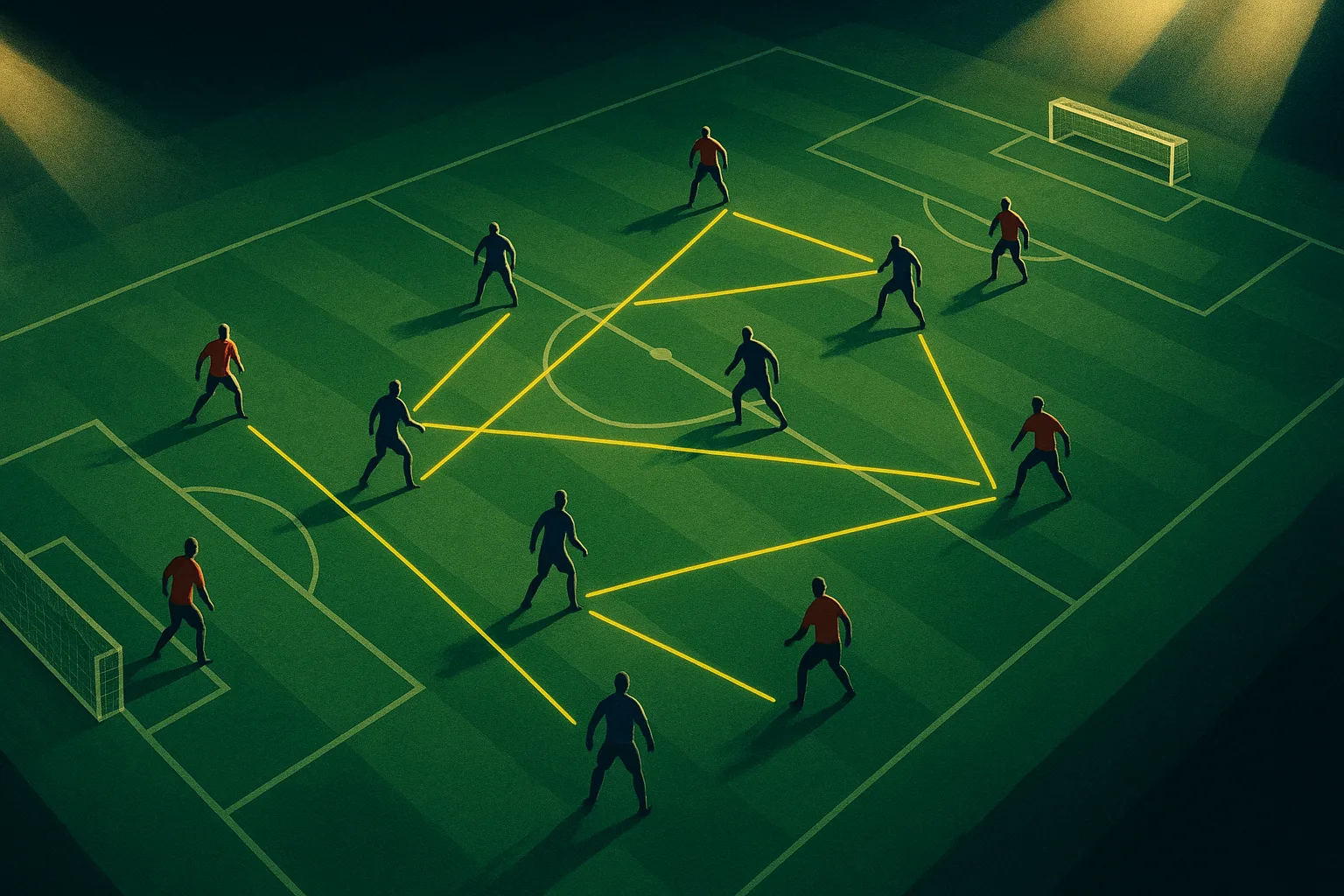
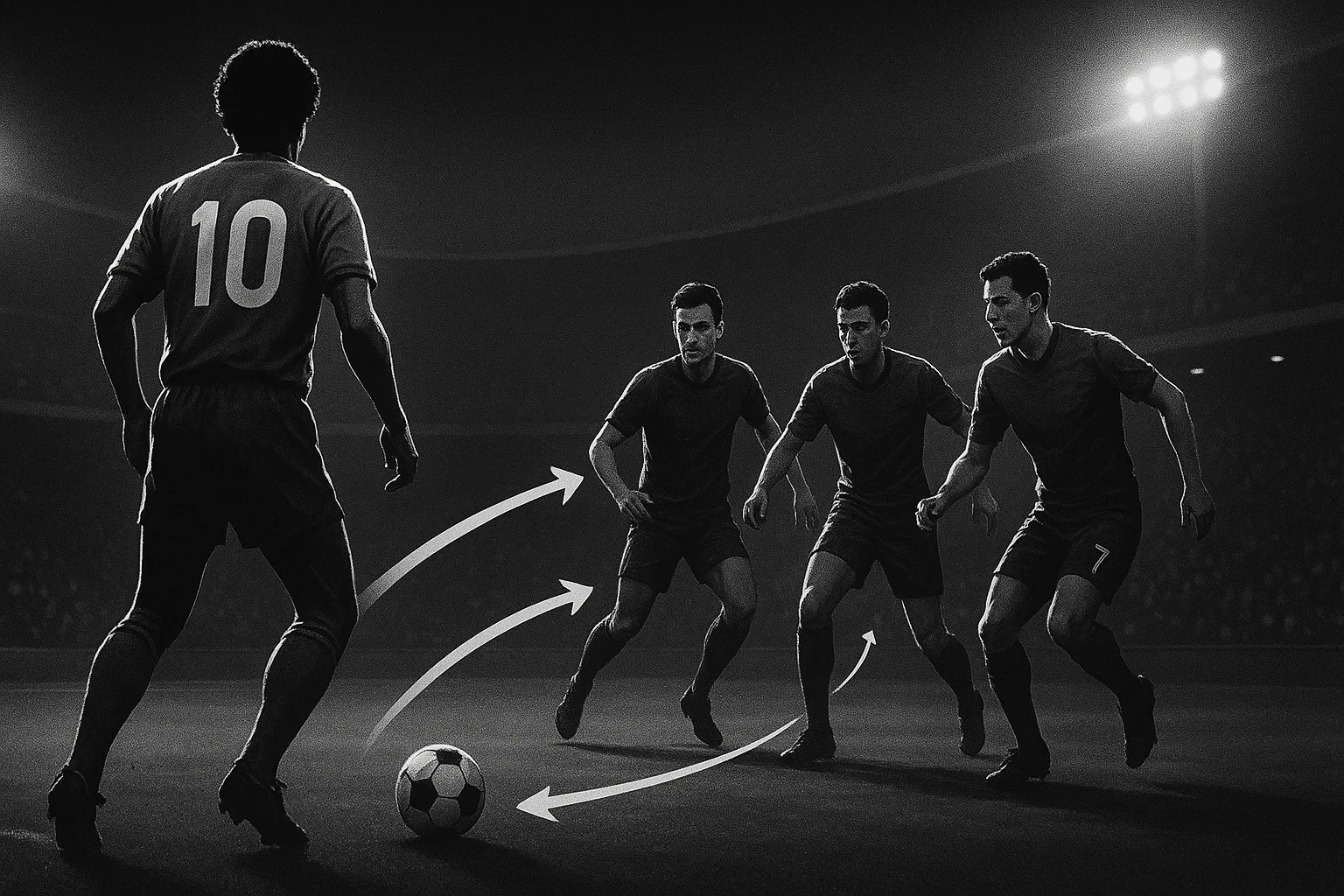
Once the ball is won, the first pass decides whether the counter lives or dies. The outlet’s job is to move the ball out of immediate pressure and into space ahead of the team. A conservative sideways pass wastes the moment; a rushed forward ball can simply give it back.
The ideal outlet is early, vertical and played into the path of a runner who is already on the half-turn. During Liverpool’s 2019–20 title-winning season, Trent Alexander-Arnold and Virgil van Dijk repeatedly hit quick diagonals into Mohamed Salah or Sadio Mané within seconds of a turnover. The pass did not need to be perfect; it needed to arrive before the first block of defenders could reorganise.
In teams that press aggressively, this phase is built into the game model. The pressing principles in Pressing 101: When to Press and When to Drop explain why coaches place a high-risk passer close to the main pressing trap: win the ball, play forward instantly.
The first pass after a turnover decides whether a counter-attack lives or dies.
Phase 3: The transition run – speed and numbers
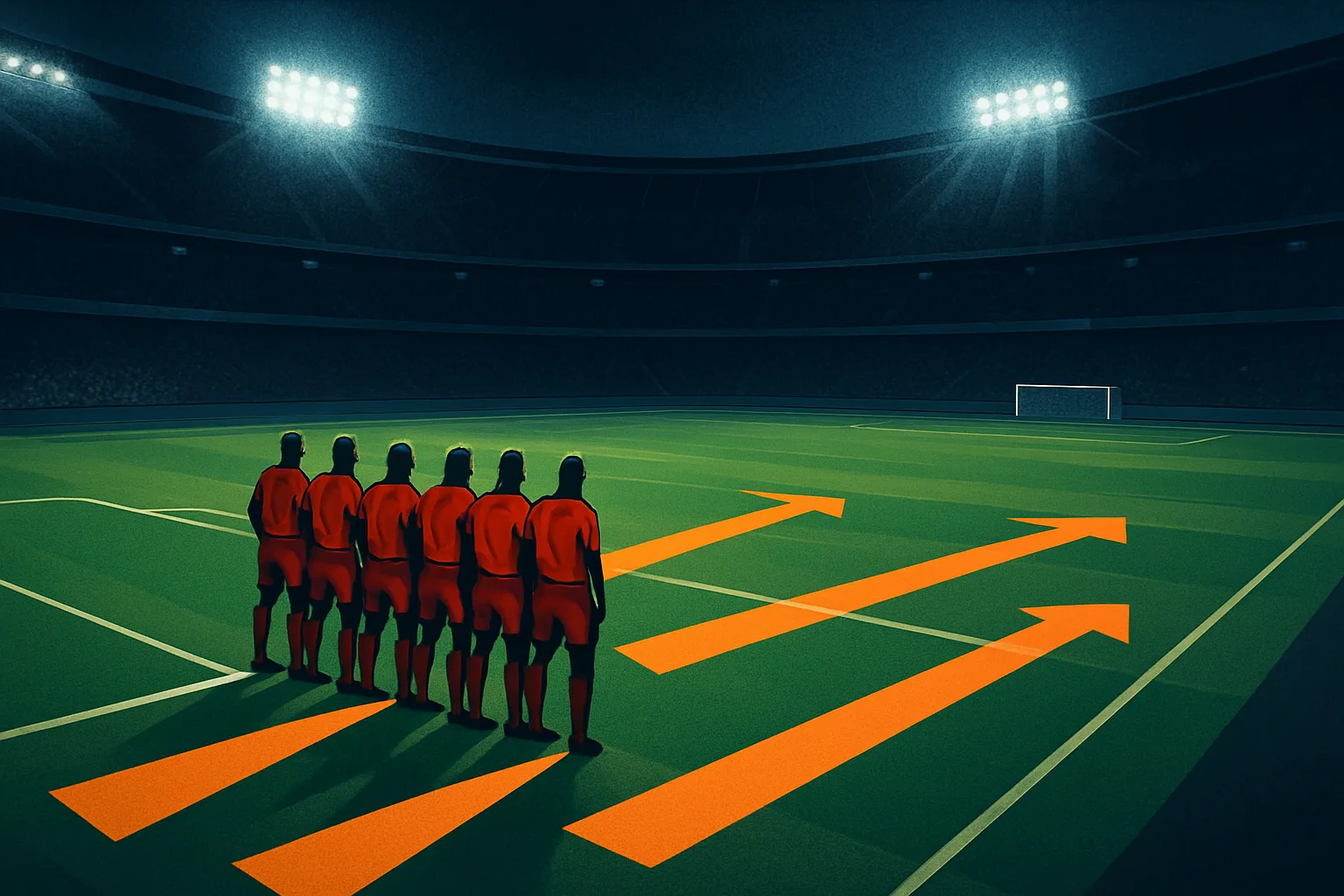
Once the outlet finds a runner, the counter becomes a race against recovery. A good transition creates either a numerical edge (more attackers than defenders) or a positional edge (attackers running at defenders who are still backpedalling).
A typical break involves two or three attackers facing two or three defenders, with support arriving from behind. The best sides stretch the back line rather than sprint into the same lane. One player attacks through the middle, another runs wide, and a third arrives late from deep. Each run forces a different defender to choose, and the defence often splits.
Timing matters as much as top speed. Kylian Mbappé’s hat-trick at Camp Nou in 2021 showed how a transition runner reads the moment before the pass: he adjusted his position in the left channel as Paris Saint-Germain broke forward and met the final ball at full pace instead of starting from a standstill.
The ball-carrier’s judgement is central here. Carrying the ball works while defenders are retreating; once they set their feet, a quick pass to a teammate attacking a different lane usually produces a better chance than another touch.
Phase 4: The final action – composure at speed
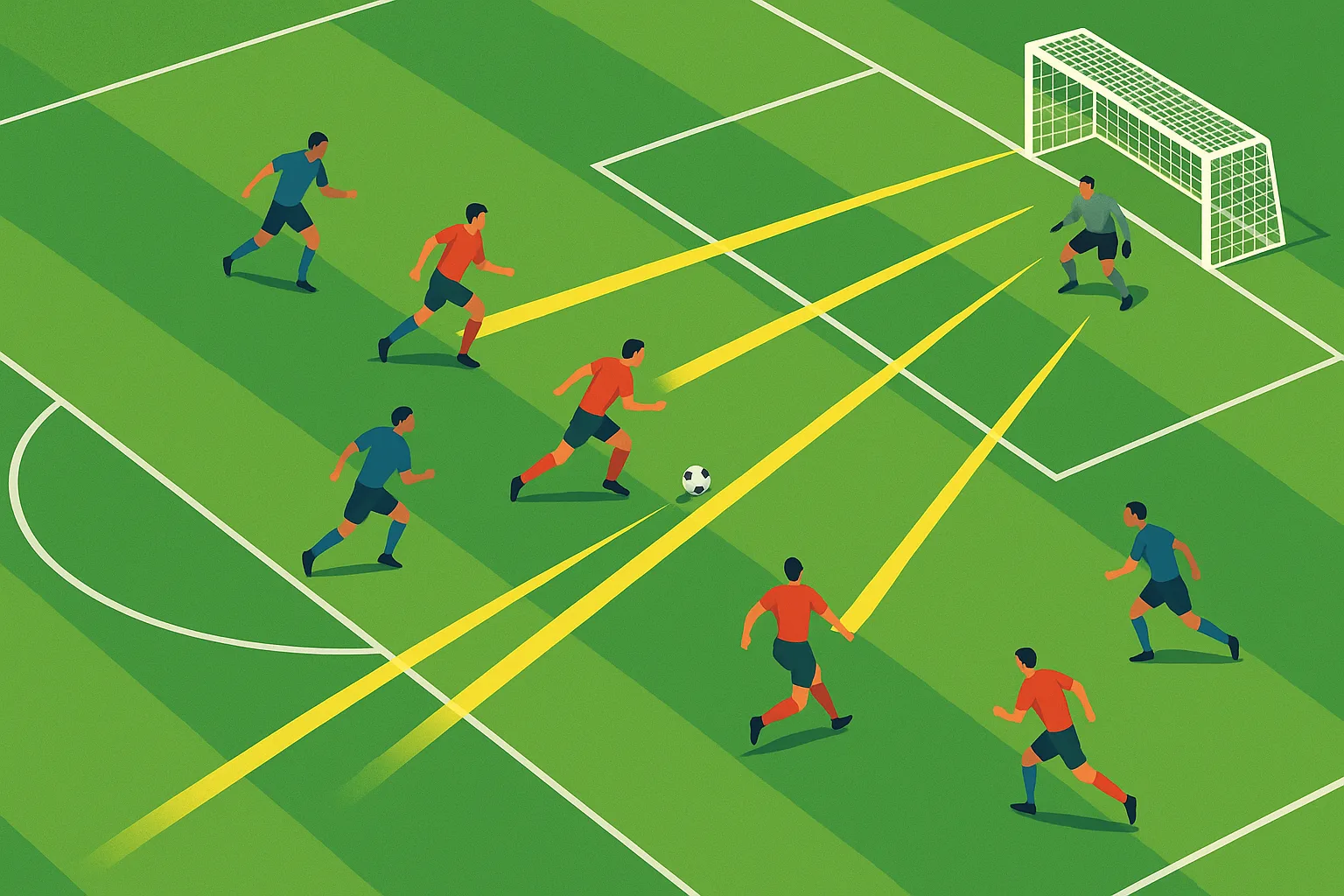
The last phase turns a transition into a shot or a decisive pass. Players sprinting at goal still have to choose cleanly: finish themselves or find the free man.
In a 2v1 or 3v2, the ball-carrier must commit the last defender or goalkeeper and release at the right moment. Real Madrid’s winner in the 2022 Champions League final is a simple blueprint. After breaking Liverpool’s midfield, Federico Valverde drove down the right and fired a ball across the box. Vinícius Júnior timed his far-post run, arrived behind the full-back and finished first touch. The speed of the move did not excuse poor technique; Valverde’s body shape and Vinícius’s run made the finish routine.
Coaches train this phase with high-speed finishing drills: one-touch or two-touch shots from angled passes, and small-sided games where a successful break must end in a shot within a set time window.
Triggers and the spaces they open
Teams do not counter every time they win the ball. They define specific triggers that justify committing runners.
- Turnover in midfield: the most common trigger, opening vertical lanes behind the opposition’s holding midfielder.
- High pressing win: regaining the ball near the opponent’s box while they are stretched, often after a pressing trap forces a rushed pass.
- Deep recovery from a low block: stealing the ball near the edge of your own area when the opponent has pushed numbers forward.
- Cleared set-piece or cross: defensive headers that land near a prepared outlet, with runners already moving upfield.
- Quick goalkeeper distribution: a save or claim followed by a fast throw or long kick into space, bypassing midfield entirely.
Recognising the trigger shapes the response. A high-press recovery calls for an immediate vertical ball into a runner. A deep recovery against a compact attack often needs a carrier capable of beating the first line before releasing.
Player profiles that power transitions
Effective counter-attacking relies on a small ensemble of complementary player types rather than a single sprinter.
- Ball-winner: reads the game early, tackles cleanly and receives facing forward. Kanté is the template: recover and release in one or two touches.
- Outlet passer: has a quick first touch, range off both feet and the nerve to play risky vertical balls under pressure.
- Transition runner: accelerates sharply over 10–30 metres and times runs off the turnover, not off the pass.
- Ball-carrier: keeps close control at speed and knows when to attack a defender and when to release. Wide forwards like Mahrez often fill this role.
- Outlet winger: stays high, attacks 1v1s and can deliver crosses or cut-backs on the move to match onrushing runners.
- Creative full-back: provides immediate width after a recovery and offers secondary passing and crossing angles to stretch the break.
- Finisher/number 9: makes blind-side runs, holds his line and finishes calmly at full pace.
- Goalkeeper distributor: claims crosses securely and turns them into attacks with early throws or long, accurate kicks.
Modern teams increasingly use a linking striker who drops off the line to connect play before spinning in behind. The space-creating behaviour of that role is explored in more detail in The False Nine: How a Forgotten Role Changed Modern Football.
Patterns top teams rely on
While every squad has unique strengths, the best counter-attacking teams lean on a small set of repeatable patterns.
- Vertical break into the channel: win the ball, play early into the space behind a high line, and trust the striker’s timing. Leicester’s title season was built on this.
- Wide outlet and early cross: the carrier drives centrally, releases a wide player on the touchline and attacks the box for a low cross or cut-back.
- Third-man run combination: the first player draws pressure, the second moves the ball, and a late-arriving runner finishes unmarked.
- Long clearance into a prepared runner: against aggressive set-pieces, a big clearance towards a designated outlet can launch instant breaks.
Real Madrid under Carlo Ancelotti favour a direct vertical route: midfield interception, one-touch layoff, then an early ball into Vinícius or Rodrygo attacking the half-space. Liverpool have paired relentless counter-pressing with fast switches to their wide forwards, turning broken attacks into sudden 1v1s.
Training counter-attacks
To make counters reliable, training has to reproduce the chaos of a turnover while preserving clear roles.
Useful drills include 3v2 breaks starting from a rebound or interception, conditioned rondos where winning the ball automatically triggers an attack into marked channels, and small-sided games with a time limit — for example, five seconds to reach the final third after a recovery.
Within those drills, coaches should assign fixed roles: who is expected to carry, who offers the outlet, who attacks the box. Video feedback helps players see whether they actually occupy those roles or default to safer habits. Over time, the first decisions after a turnover become automatic.
What coaches should prioritise
Counter-attacks are repeatable patterns, not one-off moments of luck. Build them around clear recoveries, a trained first pass, defined runners and a reliable finisher. If your team rarely creates chances from turnovers, start by filming your next match and logging the first three actions after every ball recovery. Those clips will tell you which phase is breaking down — and what you need to train next.