
When Thibaut Courtois kept out chance after chance against Liverpool in the 2022 Champions League final, he was finishing the work of a perfectly drilled low block. Real Madrid conceded the ball, absorbed 24 shots and still left Paris with the trophy because every metre in front of their box was organised.
The low block is the defensive system that makes those nights possible. It looks conservative on television. In reality, it is one of the most demanding, aggressively planned structures in modern football.
What a low block actually is
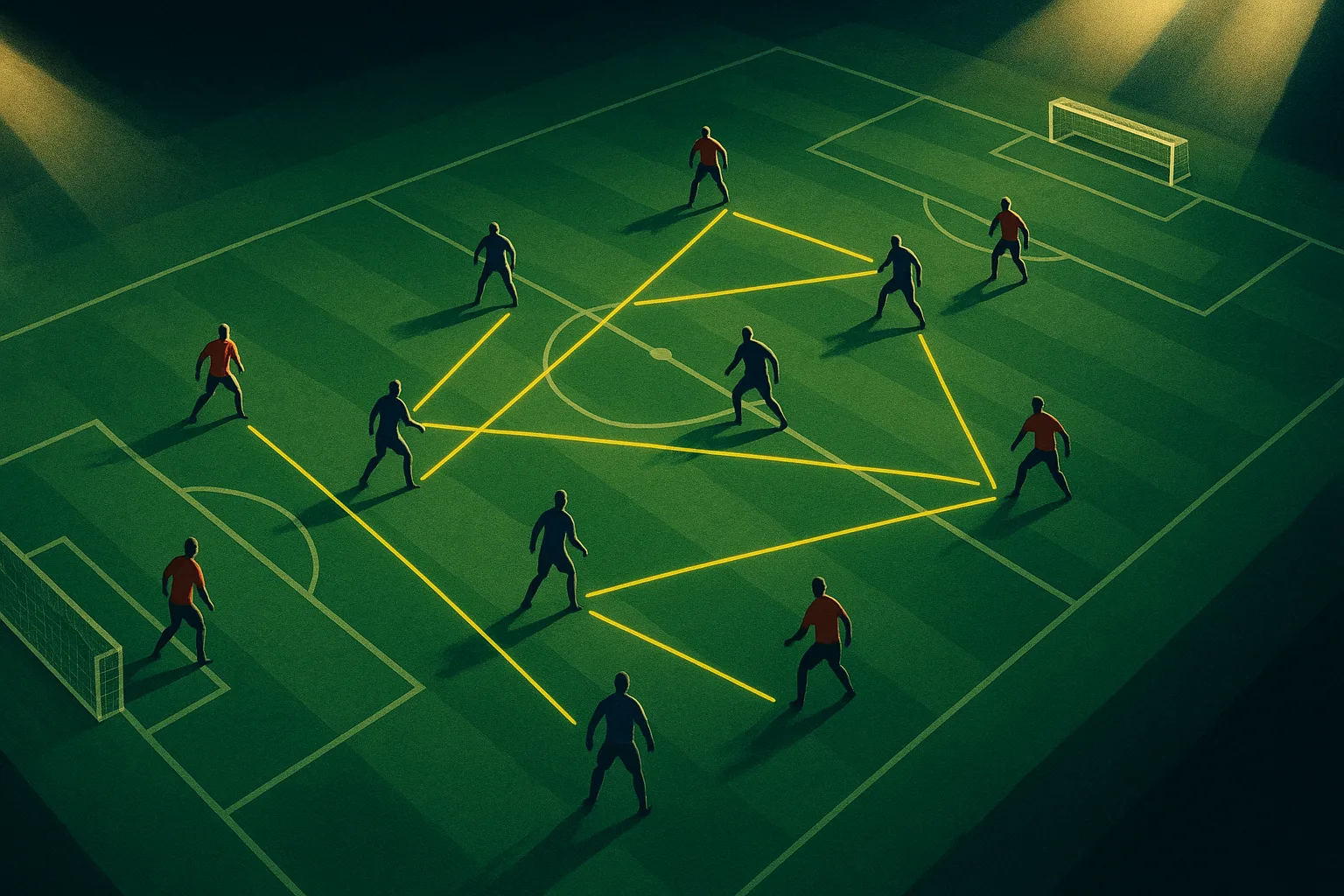
A low block means defending in your own half, usually close to or inside the penalty area. The back line sits deep, the midfield stays tight in front of it, and the team deliberately compresses the space between defence, midfield and attack.
The aim is simple: remove the space attackers need to create high-quality chances. The block takes away runs in behind, central passing lanes and access to the dangerous half-spaces behind the midfield. Opponents are pushed wide, where crosses are easier to contest than through balls, and where shots tend to be taken from worse angles.
This is not just "sitting deep". In a real low block, every player knows which zone they own, when the full-back can jump, when the winger tucks in, and what happens if the ball is switched to a particular corner. Coaches rehearse those movements until they become automatic.
A low block without a counter plan is just suffering; the best versions are coiled springs.
Why elite coaches choose it
Space, channels and the first pass
Elite coaches use the low block because it trades territory for control. By keeping the midfield line no more than roughly 20–25 yards ahead of the defence, they deny a free pocket for a playmaker to operate in. Passing into the gap between the lines becomes risky, and most circulation happens in front of a compact wall.
In the box, structure matters more than individual duels. Coaches like Massimiliano Allegri at Juventus drilled their teams to occupy key zones in the area – near post, far post, central lane, and cutback spots – regardless of opposition movement. The concession is clear: man-marking will eventually fail, but a well-rehearsed zone will not.
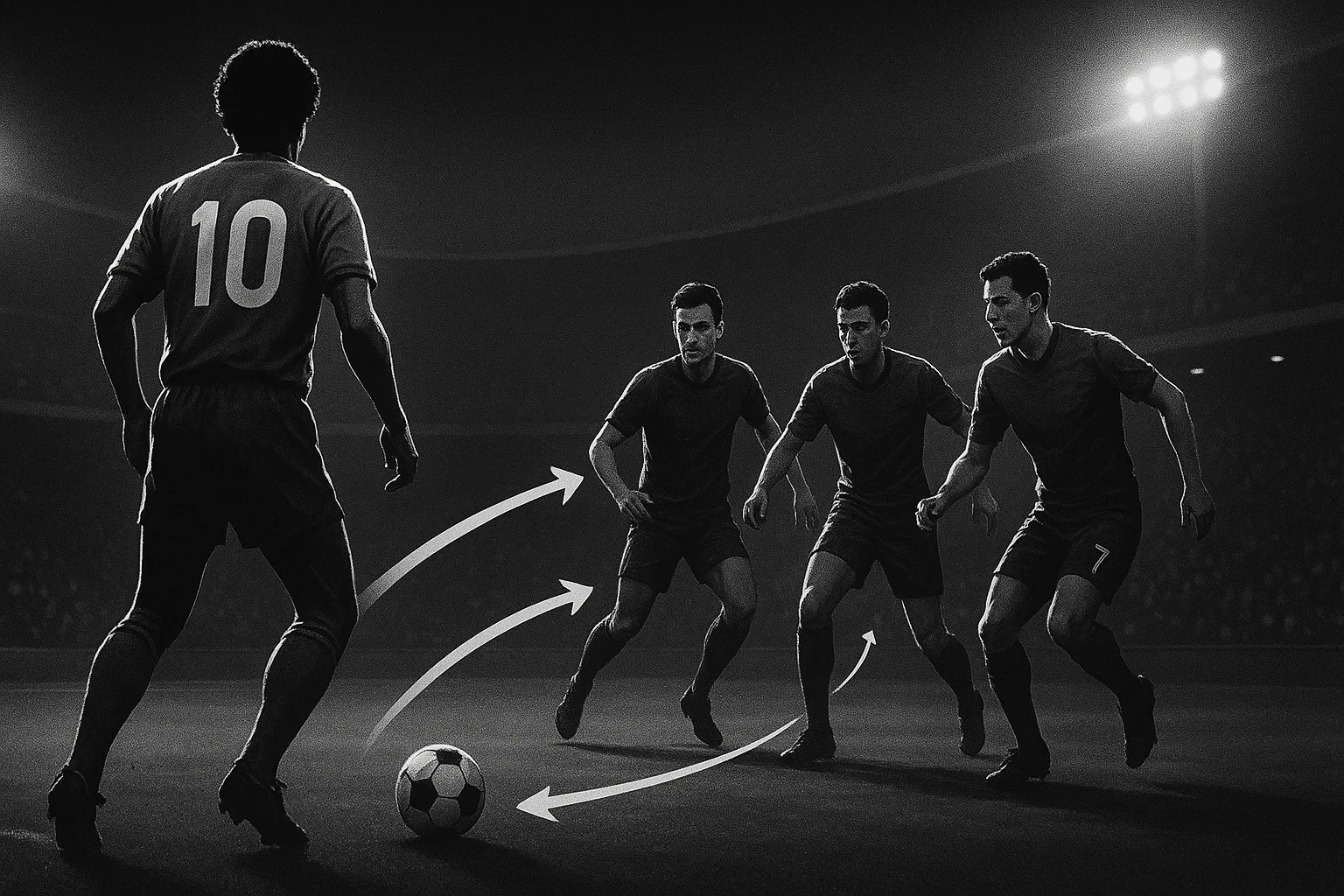
The whole plan collapses if the first pass after winning the ball is poor. Recovering possession is only half the job; turning that regain into a counter-attack is what wins trophies. That is why so many low-block teams rely on a target forward who can hold the ball and bring runners into play, as Edin Džeko has done for Simone Inzaghi’s Inter. It is also where modern interpretations of the false nine role became valuable, dropping into midfield to provide an extra outlet for that crucial first forward pass.
The psychological squeeze
Attacking into a good low block is mentally draining. The ball keeps coming back out of the most dangerous zones. Shots are taken a yard further out than usual, or a split-second later. Over ninety minutes, that grind erodes accuracy. In knockout football, where a single mistake can decide a tie, that psychological squeeze is often as important as any statistic.
Trophy cases: low blocks that lifted silverware
Porto’s 2003–04 Champions League win under José Mourinho was built on a compact shape, collective defending and ruthless counters. In the final against Monaco, Porto spent long spells without the ball yet won 3–0 because their block denied clean chances and their attacks were timed for moments of weakness.
Otto Rehhagel’s Greece at Euro 2004 were organised more than glamorous. They defended deep, won the ball in front of their own box and attacked quickly. The final in Lisbon was decided by a single header from Angelos Charisteas, but the foundation was a tournament-long low block that allowed almost nothing in central areas.
Diego Simeone’s Atlético Madrid side that won La Liga in 2013–14 did it with a famously compact 4-4-2. The two lines of four moved together, rarely opening a lane between them. Atlético often conceded territory to Barcelona and Real Madrid yet reached a Champions League final and pushed both clubs off the domestic summit by simply giving up fewer clear chances.
Claudio Ranieri’s Leicester City in 2015–16 applied the same logic to the Premier League. They defended as a unit, protected the box and then hit teams with fast counters led by Jamie Vardy and the ball-winning of N’Golo Kanté. The low block wasn’t a fallback; it was the plan.
Real Madrid’s run to the 2022 Champions League was another reminder. With Courtois behind them and a compact shape in front of him, they accepted long spells without possession against Paris Saint-Germain, Chelsea and Manchester City, yet kept finding ways through. Their box was crowded, their counters were rehearsed, and their finishing was brutally efficient.
If you go back further, Helenio Herrera’s Inter in the 1960s show how old the idea is. His version of catenaccio used a sweeper behind man-markers, defended patiently and broke quickly once possession was regained. A single goal was often enough because the defensive structure was trusted to hold.
Personnel and training: building the block
Successful low-block teams prioritise specific profiles and habits.
Centre-backs must read runs and anticipate crosses rather than simply attack the ball. The defensive midfielder is a screen who wins second balls and blocks cutbacks, much like Kanté at Leicester or Gabi in Simeone’s Atlético sides. Full-backs need the pace and discipline to defend wide channels but also the judgement to know when an overlap is safe.
Up front, forwards are chosen less for volume of touches and more for what they do with limited moments: holding the first pass, attacking space behind a disorganised line and finishing the few clear chances the team creates.
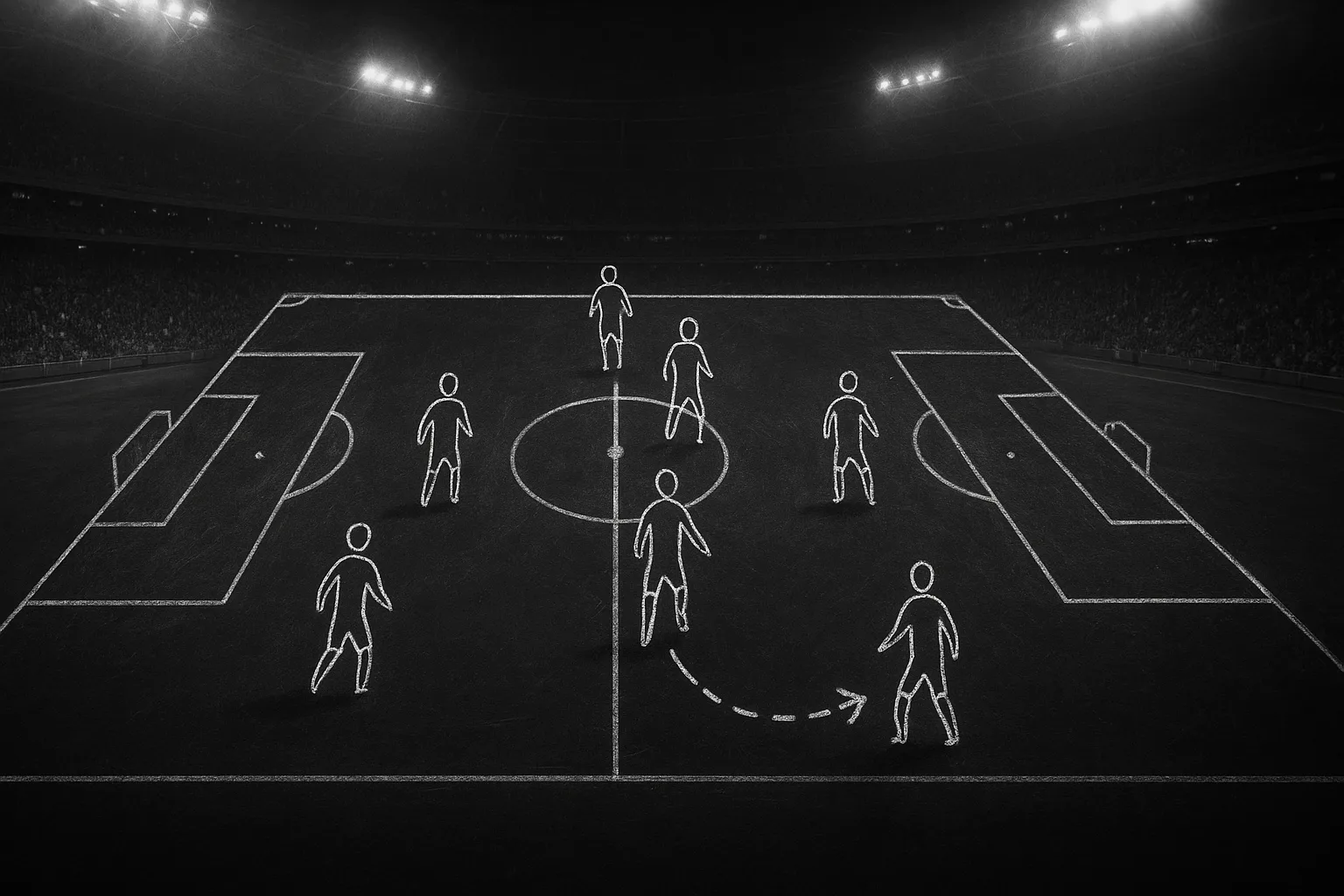
On the training ground, coaches repeat shift-timing drills: sliding across as a unit when the ball goes wide, knowing which player steps out to the carrier, and which team-mate covers the vacated lane. Trigger-based pressing is layered on top – step out when a full-back receives facing his own goal, hold shape when the ball is secure in central areas.
Set-pieces become an obsession. Deep-defending sides concede more corners and free-kicks near their box, so they drill zonal-plus-man systems to handle that volume. At the other end, they design routines that turn each attacking corner into a genuine chance, knowing they may only get a handful in a big game.
Low block, possession and pressing
The low block is, by design, the opposite of a possession-first system. Where tiki-taka sought to control matches with the ball, as explored in Tiki-Taka: The Rise and Fall of Spain’s Possession Game, the low block controls the game by managing space in front of goal and accepting that it will often have less of the ball.
Modern coaches rarely choose between pressing and defending deep; they blend them. A side can press high for the first twenty minutes, drop into a compact block once the initial energy fades, then press again in short bursts. The decision of when to step up and when to drop, the timing described in Pressing 101: When to Press and When to Drop, is what makes the low block a proactive tool rather than a permanent bunker.
Risks and the next generation
The low block carries obvious risks. Defending deep means more corners and free-kicks around your box, and one header can undo ninety minutes of good work. Fatigue is a constant threat: players in a compact block are always moving, shuffling, and concentrating, and tired legs invite late mistakes.
There is also a strategic danger when the low block stops being a tool and becomes a habit. Teams that sit deep against everyone, including opponents they should dominate, often discover they have no rhythm or structure when they finally need to take the initiative. Chelsea’s 2012 Champions League win in Munich was a triumph of resilience and deep defending, but it also showed how fine the margins are when you rarely control games with the ball.
The modern question is whether the low block can keep winning the very biggest prizes against today’s attacks. Forwards now receive in tight spaces, turn quickly and combine at higher speeds than ever. That trend shrinks the margin for error inside a packed box.
Even so, the answer from Porto, Greece, Atlético, Leicester and Real Madrid is clear. When the low block is drilled, matched to the squad’s strengths and paired with sharp counters, it remains a proactive route to silverware. It doesn’t deny ambition; it channels it into the phase of play that decides trophies: the moments when the ball enters, or fails to enter, the most important rectangle on the pitch.